ARE X-RAYS DANGEROUS?
Are X-ray tests dangerous for my dog or cat? An overview of potential risks
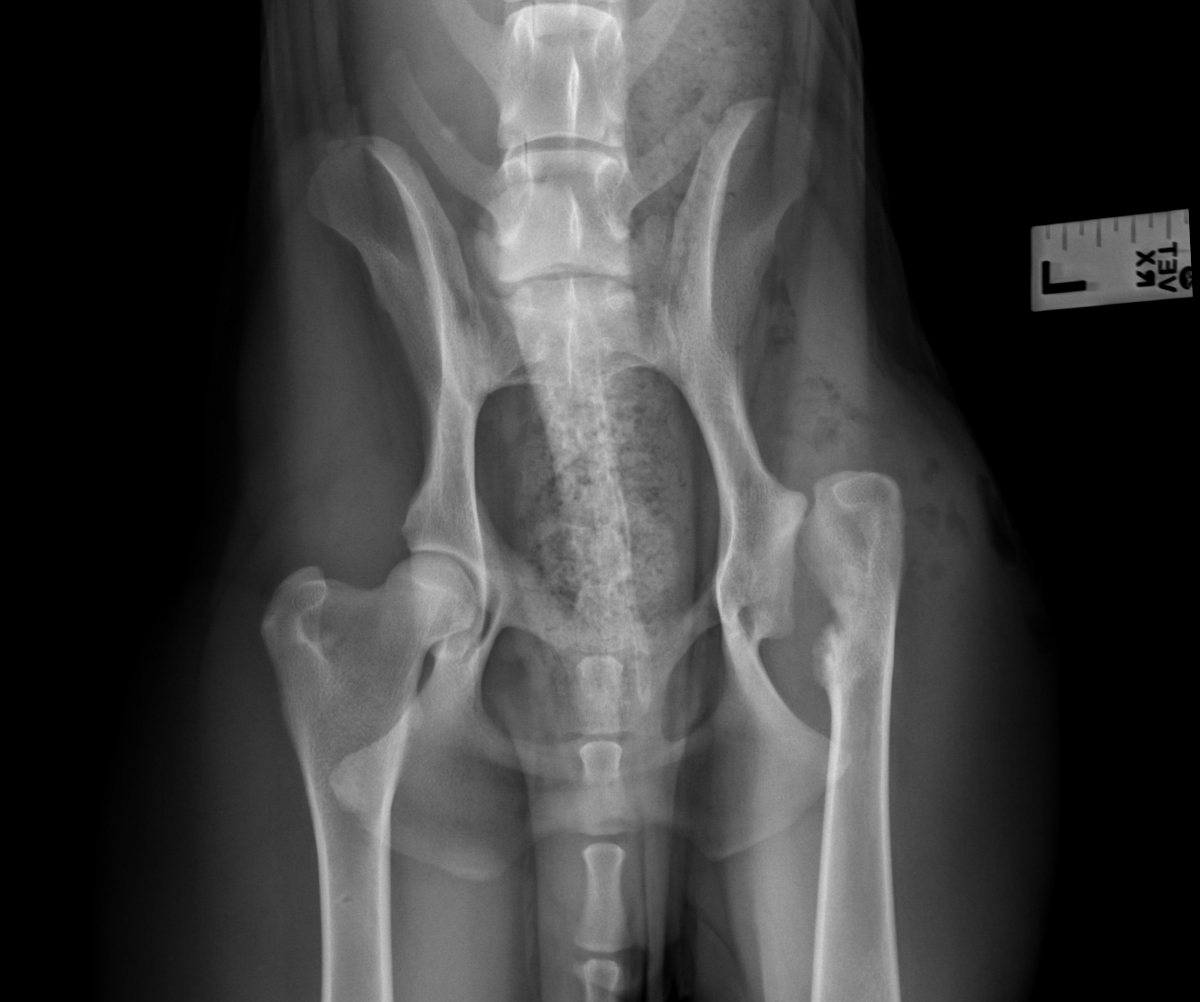
X-ray tests are among the most important diagnostic methods in veterinary medicine. They help to make bone fractures, heart and lung diseases, abdominal problems or foreign bodies visible. However, many pet owners ask themselves: Are X-rays dangerous for my dog or cat?
The short answer is:
An X-ray or radiography is a very technique when used properly. However, it makes sense to know and understand the potential risks.
How do X-rays work?
X-rays use a small amount of so-called ionizing radiation to generate images of the body's interior. Bones appear bright, soft tissues in shades of gray. In veterinary medicine, X-rays are only used when they are necessary for diagnosis (Thrall, 2018).
What are the potential risks?
1. Radiation exposure
As a general principle, ionizing radiation (such as X-rays) can theoretically damage cells. With very high or frequent doses, there is an increased risk of cell changes or cancer (Bushberg et al., 2012).
Important to know:
👉 The radiation dose of a single X-ray is very low - studies show that the doses used in diagnostics are far below the levels at which health damage would be expected (Thrall, 2018).
2. Cumulative effect of repeated tests
Radiation exposure has a cumulative effect, which means that several studies add up over the course of a lifetime. Veterinarians therefore avoid unnecessary repetitions and carefully document previous X-rays.
Thanks to modern digital X-ray technology, the required radiation dose is significantly lower today than before (Widmer & Thrall, 2015). Even with several tests, the risk for most animals remains very low.
3. Risks due to fixation or sedation
Some animals need to be kept quiet or slightly sedated for an X-ray. Sedation is considered safe, but — like any medical measure — can be minor risks mountains, particularly in older or previously ill animals (Grimm et al., 2015).
At the same time, a sedation help reduce stress and avoid repeat shots, which in turn lowers overall radiation exposure.
4. Protection of practice staff
Many radiation protection measures (lead aprons, gloves, spacing) are primarily intended to protect veterinary personnel who regularly work with X-rays. These precautionary measures do not mean that the test is dangerous for your animal (Bushberg et al., 2012).
How is the risk minimized?
Veterinary practices follow the so-called ALARA principle (As Low As Reasonably Achievable): The radiation dose is kept as low as possible without affecting image quality (Widmer & Thrall, 2015).
This includes:
• modern digital X-ray equipment
• As few, targeted images as possible
• good storage of the animal
• X-ray only when medically necessary
Why the benefits usually far outweigh
The risk of not recognizing an important disease — such as a broken bone, pneumonia, or an intestinal obstruction — is usually significantly greater than the minimal risk from an X-ray. The literature agrees that the diagnostic benefits of X-ray tests in veterinary medicine are very high (Thrall, 2018).
conclusion
👉 X-ray tests use very low doses of radiation
👉 The risk to your pet is extremely low
👉 Modern technology further reduces stress
👉 The diagnostic benefits almost always outweigh potential risks
If your vet recommends an X-ray, this is done in order to be able to help your pet in the best possible way. Don't hesitate to ask why the examination makes sense and how the safety of your animal is ensured.
references:
1st Thrall DE. Textbook of Veterinary Diagnostic Radiology. 7th edition, Elsevier, 2018.
2. Widmer WR, Thrall DE. Radiation safety and protection in veterinary medicine. Veterinary Radiology & Ultrasound, 2015.
3. Bushberg JT et al. The Essential Physics of Medical Imaging, 3rd edition, Lippincott Williams & Wilkins, 2012.
4. Grimm KA et al. Veterinary anesthesia and analgesia. Veterinary Clinics of North America: Small Animal Practice, 2015.
Explore Related Blogs

CT SCANS IN AWAKE/CONSCIOUS PATIENTS

DENTAL X-RAYS IN DOGS AND CATS