
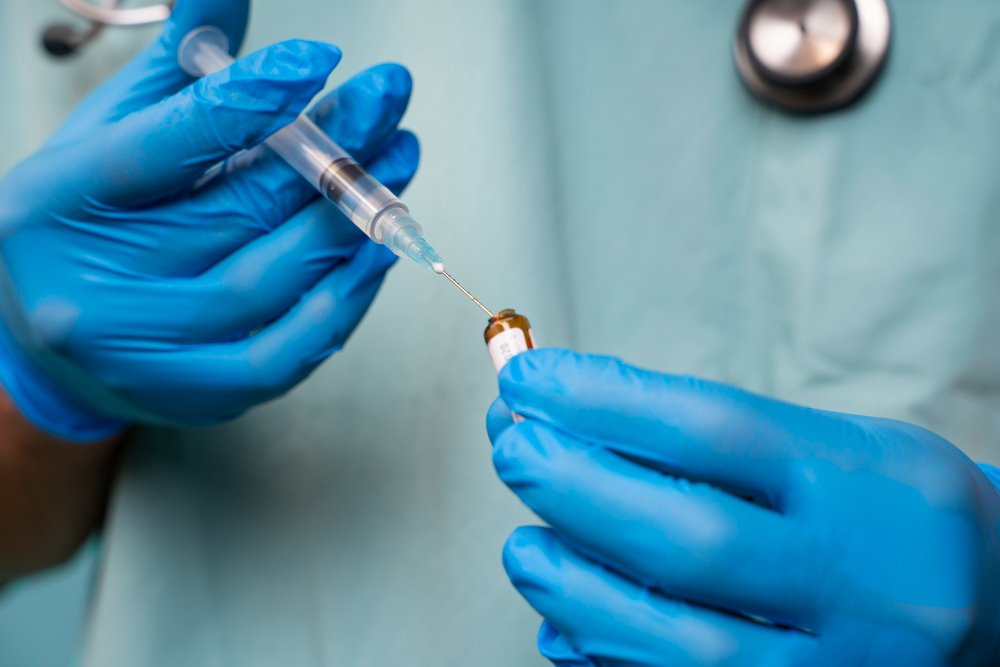
SAMPLE COLLECTION, FINE NEEDLE ASPIRATION (FNA), BIOPSY
Biopsies are an important part of medical diagnostics, as they make it possible to examine tissue changes more precisely and make a well-founded diagnosis. While surgical procedures were often necessary to obtain samples from internal organs in the past, modern imaging now allows significantly gentler procedures. Ultrasound-based sampling makes it possible to examine suspicious areas in a targeted, precise and minimally invasive way — often without major surgery and with little risk to the animal.
Ultrasound-assisted sampling for dogs and cats — FNA, biopsy and Tru-Cut® simply explained
If your dog or cat has an unusual structure — such as a lump, an enlarged spleen, or a change in the liver or kidney — your vet may recommend ultrasound-guided sampling (CT-guided samples are also possible, but much less frequently). These procedures help to more precisely determine the cause of a change and plan the right treatment.
Why ultrasound for sample collection?
Ultrasound makes it possible to display internal organs in real time. As a result, they can Ultrasound specialists Guide the biopsy needle to the desired region in a targeted and controlled manner. This increases the significance of the obtained sample and reduces the risk for surrounding structures (Penninck & d'Anjou, 2015).
What procedures are there?
1. Fine needle aspiration (FNA)
Fine needle aspiration involves taking a small amount of cells from the affected tissue using a very thin needle - in many cases, a regular syringe needle.
Typical areas of application: lymph nodes, spleen, liver, kidneys, gastrointestinal tract, thyroid, skin and subcutaneous nodules, etc.
Advantages of FNAs:
👉 Minimally invasive
👉 Usually mild sedation is suficient, some samples can be collected in awake patients
👉 Quick results
👉 Low risk of complications
The FNA is often the first diagnostic step to differentiate between inflammation, infection, or tumor (Tyler et al., 2017).
2. Ultrasound-guided biopsies/core needle biopsy/Tru-Cut® biopsies
During a biopsy, a small piece of tissue is removed, which is then examined histologically. While still relatively small, these samples allow examination of entire tissues and parts of lesions, as compared to just a few cells in FNAs, which allows an overall better assessment.
The core needle biopsies and Tru-Cut® Biopsy system are a special form of punch biopsy. A biopsy device is used to remove a cylindrical tissue core.
Typical areas of application: liver, spleen, kidneys, intestines, mass lesions / suspected tumours in internal organs, unclear FNA findings, etc.
Advantages over FNAs:
👉 Good sample quality
👉 Higher diagnostic value over FNAs
👉 Can sometimes provide decisive answers and guide treatment decisions
Biopsies usually require sedation or brief anesthesia (Penninck & d'Anjou, 2015).
What are the risks?
As with any medical procedure, there are certain risks; while overall rare, these include:
🩸 Slight bleeding at the injection site
🩹 Temporary pain at the sampling site
🩸🩸🩸 Very rare: severe bleeding, infection or severe complications
The risk is lowest with FNA and slightly higher with biopsies, but remains low with careful patient selection and ultrasound control (Vignoli et al., 2019).
Blood coagulation levels are often checked before samples are taken to further minimize the risk of bleeding.
How is my animal prepared?
• Usually fasting will be recommended (up to 12h before the procedure)
• If applicable, sedation or short anesthetic
• Shaving and disinfection of the skin at the incision site
• Post-procedure monitoring
Most animals can return home the same day.
Summary
Ultrasound-guided FNAs and Biopsies/Core Needle Biopsies/Tru-Cut® Biopsies are important, modern methods in veterinary medicine. They enable precise and correct diagnostics, often without major surgery.The benefit → a clear diagnosis and targeted treatment.
If an FNA of biopsy is recommended to your dog or cat, talk openly with your vet about the appropriate procedure, risks vs. benefits and possible alternatives.
references:
1. Penninck D, d'Anjou MA. Atlas of Small Animal Ultrasonography. 2nd edition, Wiley-Blackwell, 2015.
2. Tyler RD et al. Fine-needle aspiration cytology in small animal practice. Veterinary Clinics of North America: Small Animal Practice, 2017.
3. Bigge LA et al. Diagnostic yield and complications of ultrasound-guided Tru-Cut biopsies in dogs and cats. Veterinary Radiology & Ultrasound, 2020.
4. Vignoli M et al. Complications associated with ultrasound-guided biopsies in small animals. Journal of Small Animal Practice, 2019.
Explore Related Blogs

ARE X-RAYS DANGEROUS?

CT SCANS IN AWAKE/CONSCIOUS PATIENTS


